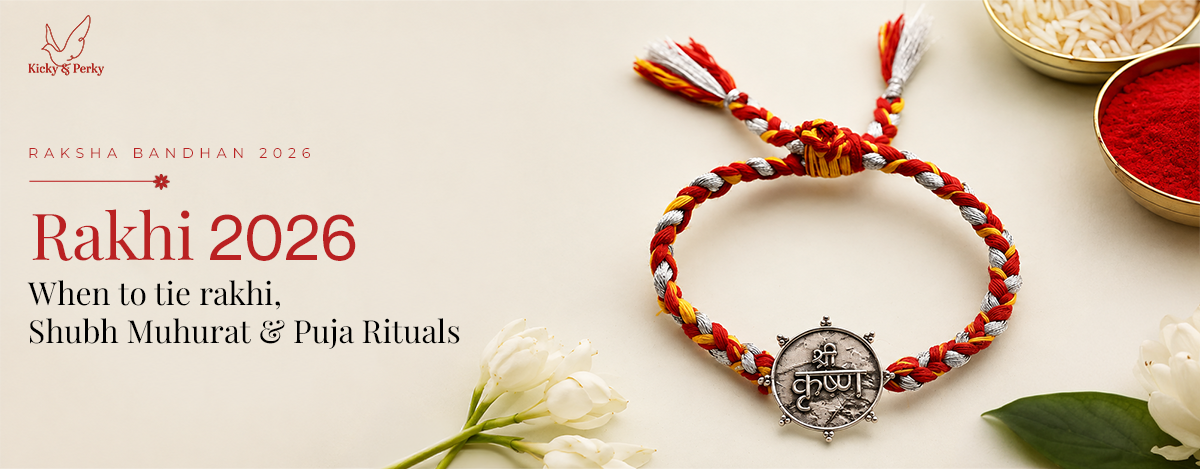
Rakhi 2026: When to Tie Rakhi, Shubh Muhurat, Bhadra Timing and Puja Rituals
Rakhi 2026 falls on Friday, 28 August, and the auspicious window to tie the thread runs from early morning, around 5:57 AM, until roughly 9:48 AM, when the Purnima tithi ends, with an afternoon Aparahna muhurat available for anyone who misses it. The day marks Shravana Shukla Purnima, the full moon of the month of Shravana, on which Raksha Bandhan is observed across India.
What follows is everything you need for the day: the exact shubh muhurat, the Bhadra period to avoid beforehand, and a simple step-by-step puja vidhi, so you can honour the bond at the right moment, and choose a rakhi worth keeping.
Key timings at a glance
● Date: Friday, 28 August 2026, Shravana Shukla Purnima.
● Best time to tie: morning, roughly 5:57 AM to 9:48 AM (New Delhi reference).
● Bhadra: confined to 27 August and clear before sunrise on the 28th, so the morning is unobstructed this year.
● If you miss the morning: the afternoon and evening remain valid; simply avoid Rahu Kaal.
When Is Raksha Bandhan 2026? (Date and Tithi)
Rakhi 2026 falls on Friday, 28 August, observed on Shravana Shukla Purnima, the full moon day of the Hindu month of Shravana. According to the panchang, the Purnima tithi begins on 27 August and continues into the morning of the 28th, and it is this window, not merely the calendar date, that governs when the rakhi may be tied.
|
Detail |
Rakhi 2026 |
|
Date |
Friday, 28 August 2026 |
|
Festival / tithi |
Shravana Shukla Purnima |
|
Purnima tithi begins |
27 August 2026 (confirm exact time on panchang) |
|
Purnima tithi ends |
28 August 2026, around 9:48 AM (confirm on panchang) |
|
Bhadra period |
Confined to 27 August; clear before sunrise on the 28th |
|
Shubh muhurat (tie rakhi) |
Around 5:57 AM to 9:48 AM on 28 August |
|
Aparahna muhurat |
Where Purnima extends into the afternoon; check local panchang |
Because the Purnima tithi can begin the evening before and stretch into the following morning, it is the exact start and end times that decide the correct muhurat, not the date alone. Timings verified from Drik Panchang for New Delhi. Confirm the minute-by-minute window for your own city before the day.
What Time Should You Tie Rakhi in 2026?
The best rakhi time in 2026 is the morning window on Friday, 28 August, from sunrise at around 5:57 AM until close to 9:48 AM, when the Purnima tithi ends. This is the single most auspicious stretch of the day, falling entirely after Bhadra has lifted and while the full moon tithi is still active.
If the morning does not suit your family, there is no need to rush. Once Purnima ends the ritual remains valid through the day. Many households simply avoid Rahu Kaal, roughly 10:46 AM to 12:22 PM in North India, and tie the rakhi in the Aparahna, the afternoon, or the Pradosh, the evening after sunset. Either is considered a little less auspicious than the morning muhurat, but by no means improper.
Shubh Muhurat and Rakhi Muhurat Timing 2026
The rakhi muhurat timing for 2026 is unusually straightforward. Because Bhadra Kaal ends before sunrise this year, the entire morning from 5:57 AM to around 9:48 AM is clear and shubh, with no waiting required. This same window is often listed as the rakhi muhurt time in panchang references, and it is the one priests recommend as the most favourable moment to tie the thread.
● Morning muhurat : roughly 5:57 AM to 9:48 AM, the primary and most recommended window.
● Aparahna muhurat : available in cities where the Purnima tithi extends into the afternoon; check your local panchang.
● Pradosh muhurat : an evening alternative after sunset, for those who miss both the morning and the afternoon.
These are reference timings for New Delhi. The exact window shifts slightly by city with local sunrise and moonrise, so a quick panchang check for your location is always worth the minute it takes.
The Bhadra Period 2026: Why You Must Avoid It
Bhadra, also called Vishti Karana, is a period within the panchang traditionally considered inauspicious for beginning anything of importance, weddings, housewarmings, and the tying of a rakhi among them. It usually occupies the first half of the Purnima tithi, which is precisely why families have long waited for it to lift before starting the Raksha Bandhan ritual.
The custom rests on a well-known legend. It is said that Ravana had a rakhi tied on him during Bhadra, and his downfall followed soon after. Ever since, Bhadra has been treated as a period to sidestep entirely for the ceremony, however convenient the hour might otherwise seem.
The happy news for 2026 is that Bhadra is not a factor on the festival day at all. It falls within 27 August and lifts before sunrise on the 28th, so there is no overlap with the morning muhurat and nothing to time your ritual around this year.
Bhadra Timing for Rakhi 2026
Bhadra Kaal is confined to 27 August 2026 and ends before sunrise on the 28th. That leaves the entire shubh muhurat window, roughly 5:57 AM to 9:48 AM on the 28th, completely free of Bhadra, a rare and uncomplicated year for rakhi timing.
● Bhadra period: 27 August 2026; it does not extend into the 28th.
● Status on the 28th morning: clear, with no Bhadra conflict.
● Practical takeaway: you may tie the rakhi any time from sunrise onward on the 28th without checking for Bhadra first.
As always, confirm the exact Bhadra start and end for your city on a live panchang before the day, since the timings shift by a few minutes with location.
Raksha Bandhan Puja Vidhi: Step-by-Step Rituals
The ceremony is simple, but performing it in the right order makes it feel complete. Here is the traditional puja vidhi to follow once you are within your shubh muhurat window.
-
Prepare the puja thali. Set out roli, akshat (rice), a diya, sweets, water, and the rakhi itself on a clean thali, ready before your brother sits down so the ritual flows without interruption.
-
Seat your brother facing east or north. Both are considered auspicious. He sits comfortably, with the sister to his right.
-
Perform the aarti. The sister lights the diya and circles it before her brother, praying for his health and long life.
-
Apply the tilak. Using roli mixed with a few grains of rice, she marks his forehead, a sign of protection and blessing.
-
Tie the rakhi on his right wrist, reciting a short prayer for his safety as she does.
-
Offer sweets. She feeds him a sweet, for the sweetness the year ahead should hold.
-
Exchange blessings and gifts. He blesses her in return and offers a gift or shagun, a token of his promise to protect her.
Many families keep the tradition of the sister fasting until the rakhi is tied, treating the ceremony as the first act of the day. It is not universal, but it is common in North Indian households observing the morning muhurat.
What to Put in the Rakhi Puja Thali
A complete thali needs little, and most of it is already in the house:
|
Item |
Purpose |
|
Roli / kumkum |
The tilak on the brother's forehead |
|
Akshat (rice) |
Blessings and prosperity |
|
Diya |
The aarti |
|
Sweets |
Shared once the rakhi is tied |
|
Rakhi |
The sacred thread itself |
|
Water |
Purification through the ritual |
Regional Variations and If You Miss the Muhurat
Raksha Bandhan looks a little different across the country. In the North, across Delhi, Uttar Pradesh, Rajasthan, and Punjab, the morning muhurat is strongly preferred, with families gathering soon after sunrise. In Maharashtra and Gujarat the day often coincides with Nariyal Purnima, marked with coconut offerings alongside the rakhi. In parts of the South, particularly among Brahmin communities, it falls on Avani Avittam, when the sacred thread is renewed.
And if you miss the exact muhurat, there is no cause for worry. Since 2026 carries no Bhadra conflict on the 28th, the whole clear tithi period, not only the short morning window, is considered acceptable for tying the rakhi. Simply avoid Rahu Kaal, and steer clear of Bhadra where it applies in your city. The bond the ritual marks matters more than the precise minute it is tied.
The Significance of Raksha Bandhan


At its heart, Raksha Bandhan is not really about the clock. It is about the thread itself, a simple symbol carrying a large promise: a sister's prayers for her brother's wellbeing, and his vow to stand by her through anything. It is why the ritual has endured, largely unchanged, even as families have spread across cities and countries.
For many siblings, the rakhi they choose becomes part of that memory, something kept long after the day is over. If you are choosing one this year, our shop silver rakhis for 2026 collection is designed to be exactly that, a keepsake as much as a tradition. If you are unsure where to begin, our guide on how to choose a silver rakhi for your brother walks you through it. However you observe the day, the timing matters less than the bond it marks.
Conclusion
To sum up: Rakhi 2026 falls on Friday, 28 August, with the most auspicious rakhi time running from around 5:57 AM to 9:48 AM, a rare year with no Bhadra to work around, so the whole morning is clear for the ceremony. Whether you tie the thread at sunrise or later in the day, what matters most is the bond it celebrates.
Wishing you and your family a happy and blessed Raksha Bandhan. If you are still looking for the right rakhi, explore our silver rakhi collection, or see how it compares in our silver rakhi vs thread rakhi guide.
Frequently Asked Questions
When is Rakhi in 2026?
Rakhi 2026 falls on Friday, 28 August, observed on Shravana Shukla Purnima, the full moon of the month of Shravana. The date is celebrated as Raksha Bandhan across North, West, and South India, and is confirmed consistently across major panchang sources.
What is the best time to tie rakhi in 2026?
The best rakhi time is the morning window on 28 August, from around 5:57 AM until 9:48 AM, when the Purnima tithi ends. This falls entirely after Bhadra has lifted, which makes it the most auspicious stretch of the day for the ceremony.
What is the rakhi muhurat timing for 2026?
The rakhi muhurat timing for 2026 is roughly 5:57 AM to 9:48 AM in New Delhi, sometimes listed as the rakhi muhurt time in panchang references. Timings shift slightly by city, so confirm the exact minute for your location before the day.
What is the Bhadra period in 2026, and can I tie rakhi during it?
Bhadra in 2026 falls entirely on 27 August and ends before sunrise on the 28th, so it does not overlap with the festival day. Tying rakhi during Bhadra is traditionally avoided, but this year there is no conflict to plan around.
Can rakhi be tied in the afternoon or evening?
Yes. If the morning muhurat is missed, the rakhi can be tied in the Aparahna, afternoon, or Pradosh, evening, period, provided Bhadra is not active. It is best to avoid Rahu Kaal and check a local panchang for the exact window in your city.
What items are needed in the rakhi puja thali?
A traditional thali holds roli or kumkum, akshat (rice), a diya, sweets, the rakhi, and water. These support the tilak, the aarti, and the blessing, and most households already have them to hand.
What happens if I miss the shubh muhurat?
Missing the exact muhurat is not a problem. Since 2026 has no Bhadra conflict on 28 August, the whole clear tithi period is acceptable for tying the rakhi. Simply avoid Rahu Kaal where you can.