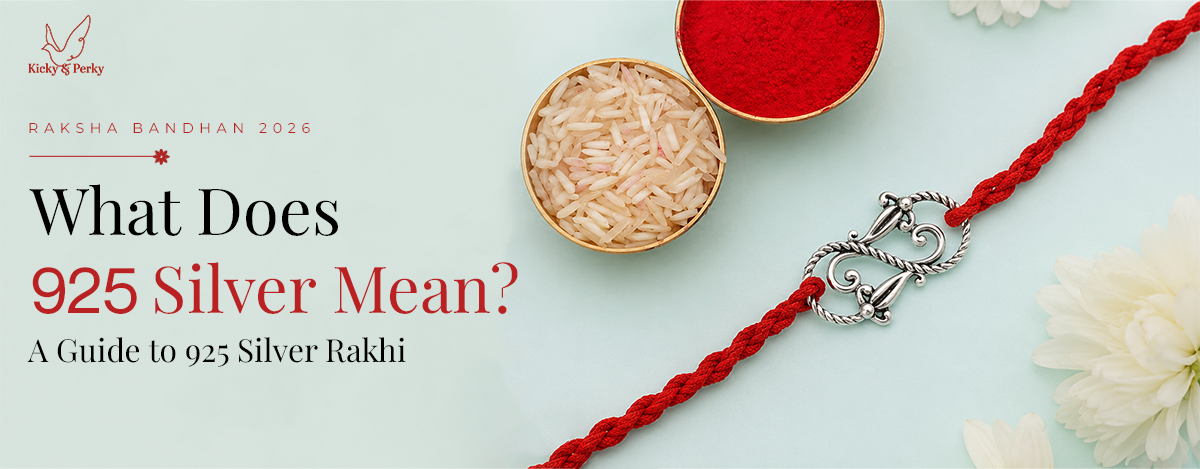
925 Silver Rakhi: What Does 925 Mean and Why It Matters for Raksha Bandhan
You have seen “925” stamped on silver, but what does it actually mean? If you are choosing a 925 silver rakhi for Raksha Bandhan this year, that small stamp is the one detail that separates a genuine, lasting keepsake from a piece that merely looks like silver. It is not a brand or a random figure. It is a purity mark, and it tells you exactly how much real silver is in the piece you are holding.
In this guide we answer the “925 meaning” question plainly, explain why it is the standard for fine silver jewellery, and show why it matters when you are choosing the right silver rakhi for your brother.
The short answer: 925 silver means 92.5% pure silver mixed with 7.5% other metals, usually copper. That is sterling silver.
What Does 925 Silver Mean?
925 silver means 92.5% pure silver combined with 7.5% other metals, usually copper, and it is also known as sterling silver. That is the complete 925 silver meaning in a single line. It is not a brand or a style, but a purity standard stamped directly onto the metal to guarantee that what you are buying is real.
So when someone asks what 925 silver means, the short answer is simple: it is the internationally recognised mark of genuine sterling silver. The “925” engraved on a rakhi, a ring, or a chain is a purity code rather than a decoration. It exists precisely so that buyers can verify authenticity at a glance, without lab equipment or a jeweller's certificate.
Why It's Called “Sterling Silver”
92.5% purity is the global benchmark for sterling silver, recognised across India, the UK, the US, and most major jewellery markets. The “925” stamp reads as parts per thousand: of 1,000 parts of metal, 925 are pure silver and the remaining 75 are alloy, typically copper. The ratio is not arbitrary. It has been the standard for centuries because it strikes the ideal balance between purity and strength, which is where we turn next.
Why 100% Pure Silver Isn't Used for Jewellery
If 92.5% is the standard, why not simply use pure silver? The answer is strength. Pure silver, known as 999 fine silver, is remarkably soft, closer in hardness to gold or copper than to steel. On its own it bends, scratches, and loses its shape far too easily to survive daily wear, let alone the handling a rakhi endures as it is tied, worn, and stored year after year.
That is what the remaining 7.5% is for. Alloying pure silver with a little copper produces a metal that is significantly harder and more durable, without dimming silver's natural shine or its cool, lustrous white tone. This is exactly why sterling silver, not pure silver, became the global standard for jewellery, cutlery, and keepsakes. It holds its shape, resists dents, and lasts for years rather than months. Far from being a shortcut, that 7.5% is what makes silver jewellery wearable in the first place.
What Does “925” Mean on a Rakhi?

Now that you know what 925 means in general, here is why it matters when you are choosing a rakhi. A 925 silver rakhi is not simply a thread with a metal charm. It is a piece of fine jewellery made to last, and that changes what you should expect from it.
Because of that 92.5% purity and the copper alloy, a genuine 925 piece brings real advantages over an ordinary rakhi:
● Durable - It holds its shape and finish through daily wear rather than bending or dulling within weeks.
● Tarnish-resistant - It darkens only slowly, and a soft cloth brings the shine back in moments.
● Hypoallergenic - With no cheap nickel-heavy alloy, it sits comfortably on sensitive skin, which matters for brothers and children who react to costume metal.
● Keepsake-quality - It carries genuine material value, not sentiment alone, so it is worth keeping.
● Reusable - Many designs are made to be worn on afterwards as a bracelet or pendant.
● In other words, 925 is not merely a technical detail. It is what turns a rakhi from a one-day tradition into a gift your brother can actually keep and wear.
How to Tell if a Silver Rakhi Is Real 925 Silver
With so many silver-look rakhis on the market, it is worth knowing how to spot a real silver rakhi before you buy. This checklist covers it:
-
Check for the 925 or 925 stamp, engraved somewhere on the metal charm or clasp.
-
Look for a BIS hallmark, India's official purity certification for silver.
-
Weigh it in your hand. Genuine silver feels noticeably heavier than base-metal look-alikes of the same size.
-
Inspect the colour. Real silver has a soft, slightly warm white-grey tone, not a harsh, over-bright shine.
-
Ask for a purity certificate or invoice. A reputable seller will confirm 925 purity in writing.
Look for the 925 / BIS Hallmark
The most reliable proof is the hallmark itself. A genuine genuine pure silver rakhi carries a small “925” or “.925” stamp, often beside a BIS mark if it is sold by a certified Indian jeweller. It is usually tucked into the clasp, the back of the charm, or an inconspicuous edge, so look closely. You can read what the mark guarantees on the official BIS website.
Simple At-Home Tests (Magnet, Ice, Smell, Weight)
A few quick checks at home can support what the hallmark tells you, though none should replace it:
● Magnet test - Silver is not magnetic, so if the piece clings to a magnet, it is not genuine 925.
● Ice test - Silver conducts cold quickly, so an ice cube tends to melt faster against it than against other metals.
● Weight test - Silver feels denser than the lightweight alloys used in look-alikes of the same size.
● Smell test - Genuine silver is odourless. A metallic smell often points to a base-metal alloy.
Treat these as indicative rather than conclusive. The hallmark and the seller's documentation remain the dependable proof of purity.
925 Silver vs Silver-Plated vs Pure (999) Silver
The three are easily confused, and the difference decides whether a rakhi lasts. Here is how they compare at a glance.
|
Feature |
925 sterling |
Silver-plated |
Pure (999) |
|
Silver content |
92.5% |
A thin coat only |
99.9% |
|
Durability |
High |
Low; wears off |
Soft; bends |
|
Tarnish |
Slow, and cleanable |
The coating flakes |
Slow |
|
Value |
Holds its value |
Low |
High but soft |
|
Best for a rakhi |
Ideal, a durable keepsake |
A budget look only |
Not ideal, too soft |
The takeaway is clear enough. Silver-plated pieces carry only a thin surface coat that wears through. Pure 999 silver is too soft to survive daily handling. For a rakhi, 925 sterling is the natural choice, hard enough to endure and pure enough to hold its worth.
How to Care for Your 925 Silver Rakhi
A little care keeps a silver rakhi looking new for years. Silver reacts with air and moisture over time, so the aim is simply to slow that down.
● Storage - Keep it dry and separate, ideally in an airtight pouch or a lined box, away from other metal.
● Moisture - Remove it before swimming, and let perfume, deodorant, and hair products settle before it goes on.
● Cleaning - A soft, dry cloth after wear handles most of it. For more, use mild soap, warm water, and a soft brush, then dry thoroughly.
● Anti-tarnish tip - Tuck a stick of chalk or a silica sachet into the storage pouch to absorb moisture and slow tarnish.
Why Choose a 925 Silver Rakhi for Raksha Bandhan
Raksha Bandhan is about more than a thread. It is a promise, and the gift you choose can carry that same weight. A genuine silver rakhi turns a one-day ritual into something your brother keeps long after the celebration ends. Unlike an ordinary rakhi that is set aside or discarded, a genuine silver piece holds real value, sentimental and material alike.
Silver has long been tied to protection, purity, and auspicious beginnings in Indian tradition, which makes it a fitting metal for a bond built on care and trust. And because sterling is durable and reusable, many brothers wear the charm on afterwards as a pendant or bracelet, keeping the memory close all year. If you want this Raksha Bandhan to leave a lasting impression, explore our shop our silver rakhi collection, each piece crafted in genuine, certified 925 sterling silver. For help choosing, see how to choose a silver rakhi for your brother.


Conclusion
So, what does 925 mean? Simply that the silver is 92.5% pure, mixed with 7.5% copper, the internationally recognised standard for genuine sterling silver. That small stamp is your assurance that a piece is real, durable, and built to last, rather than something that merely looks the part.
For Raksha Bandhan, choosing a 925 silver rakhi means giving a gift with lasting value, one your brother can wear or keep well beyond the festival, unlike ordinary rakhis that fade or are discarded. It is a small detail that turns a yearly tradition into a keepsake. Ready to find the perfect piece? Shop our 925 silver rakhi collection today.
Frequently Asked Questions
What does 925 silver mean?
925 silver means the metal is 92.5% pure silver combined with 7.5% other metals, usually copper, which is the internationally recognised definition of sterling silver. The number refers to parts per thousand, so 925 of every 1,000 parts are pure silver.
Is 925 silver real silver?
Yes. 925 silver is genuine, real silver, not an imitation or a coating. A real silver rakhi stamped 925 contains actual sterling silver, unlike silver-plated pieces, which carry only a thin surface layer over a base metal.
Is a 925 silver rakhi good quality?
Yes. A piece stamped 925 is considered high quality because it is durable, tarnish-resistant, and holds real value over time. Unlike an ordinary rakhi, it is built to be worn or kept as a lasting keepsake rather than discarded after the festival.
Does 925 silver tarnish or turn black?
925 silver can tarnish slightly over time through natural exposure to air and moisture, but it does not blacken easily and cleans up well with a soft polishing cloth. Storing it in an airtight pouch slows tarnishing considerably.
Is 925 sterling silver better than pure (999) silver for a rakhi?
Yes. For a rakhi, 925 sterling is the better choice, because pure 999 silver is too soft and bends or scratches easily. The 7.5% copper in 925 adds strength, which makes it far more practical for everyday wear.
How can I check if my silver rakhi is real 925 silver?
Look for a “925” or “925” hallmark, ideally beside a BIS mark, engraved on the piece. Weight and colour offer supporting clues, but the hallmark and the seller's documentation remain the most reliable proof of authenticity.
Is 925 silver safe for sensitive skin?
Yes. 925 silver is generally safe and hypoallergenic for sensitive skin, since it does not contain the nickel found in many cheaper alloys. That makes it a comfortable choice for daily wear, particularly for anyone prone to irritation.