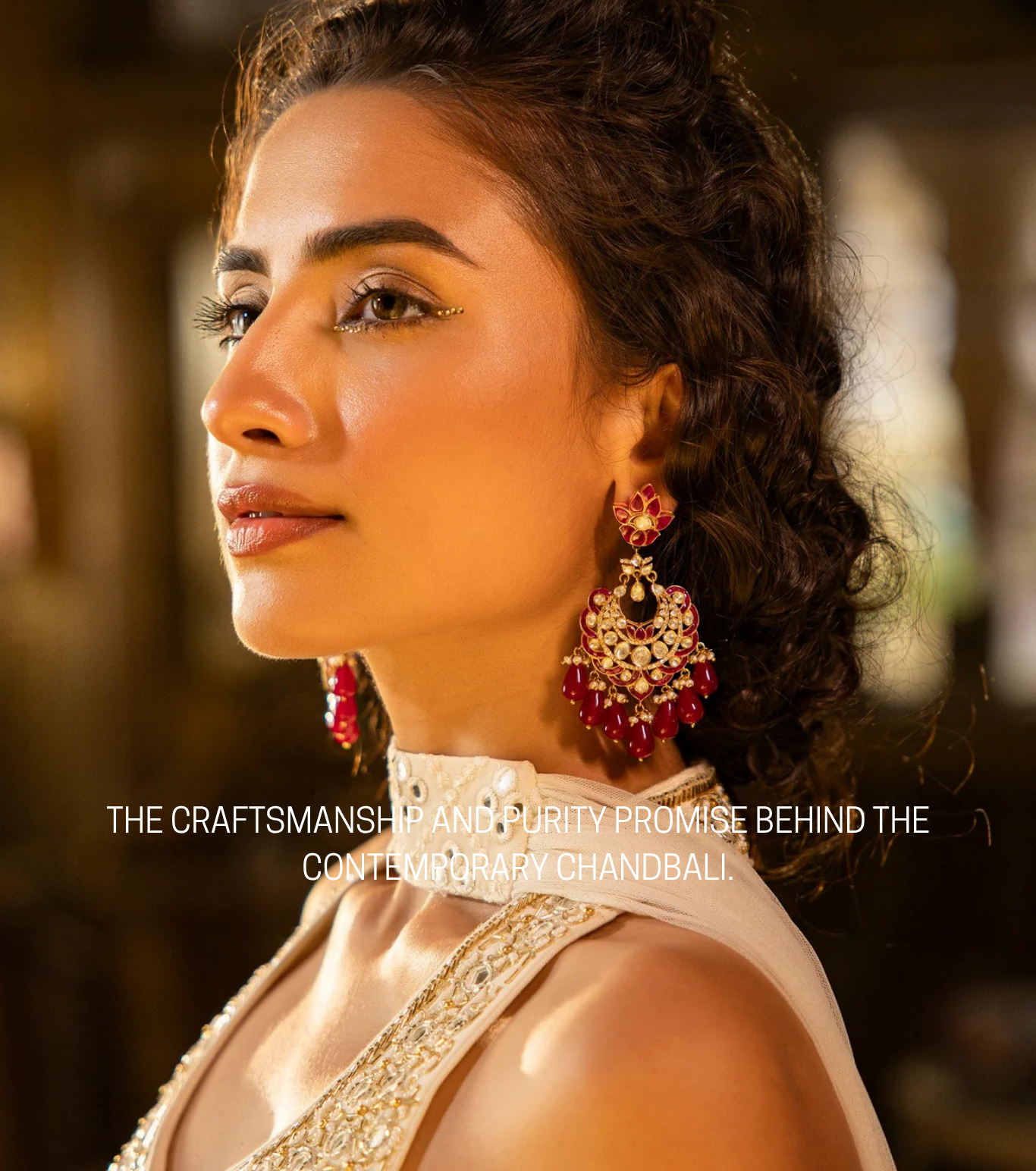
Moonlit Heritage The Craftsmanship and Purity Promise Behind the Contemporary Chandbali.
In an age of fast fashion, choose the permanence of hallmarked silver. Explore the technical rigor and artisan transparency of Kicky & Perky’s chandbali collectionbecause true luxury isn't just about the shimmer it's about the "Silver Science" that lasts a lifetime
Few jewellery styles carry the timeless charm and royal elegance of chandbali earrings. Inspired by the crescent moon, these iconic designs have travelled from Mughal-era royalty to contemporary Indian weddings, becoming a must-have accessory in every jewellery collection.
Today, chandbali styles are loved for their graceful curves, intricate detailing, and ability to elevate both traditional and fusion outfits.
What is a Chandbali?
The term chand bali comes from two words:
-
Chand – meaning moon
-
Bali – meaning earrings
So, chandbali earrings literally translate to “moon-shaped earrings.” These earrings feature:
-
Crescent-shaped design
-
Layered detailing
-
Pearl or gemstone embellishments
-
Intricate filigree work
Their elegant structure makes them ideal for festive occasions and weddings.
Mughal Origins of Chandbali Earrings
The history of chandbali dates back to the Mughal period. Mughal queens and royal women wore elaborate crescent-shaped earrings adorned with:
-
Kundan stones
-
Polki diamonds
-
Pearls
-
Gold filigree
These chandbali designs symbolized luxury, grace, and royal heritage. Over time, this style spread across Rajasthan, Hyderabad, and North India, becoming a staple in bridal jewellery.
Evolution of Chandbali Designs
Modern chandbali designs have evolved while retaining their traditional essence. Today, you can find:
-
Minimal silver chandbali
-
Gemstone chandbali
-
Lightweight chandbali jhumka
-
Pearl chandbali earrings
-
Contemporary geometric chand bali design
A beautiful modern interpretation

This piece blends traditional silhouette with modern elegance.
Chandbali vs Chandbali Jhumka
Many people confuse chandbali with chandbali jhumka. Here's the difference:
Chandbali
-
Crescent moon shape
-
Flat or layered structure
-
Elegant and structured look
Chandbali Jhumka
-
Crescent top with bell-shaped drop
-
Heavier appearance
-
More traditional bridal style
Both are popular choices for weddings and festive occasions.
Why Chandbali Earrings are Perfect for Weddings
Chandbali earrings are a wedding favourite because they:
-
Frame the face beautifully
-
Complement ethnic outfits
-
Match bridal lehengas
-
Work with sarees and anarkalis
-
Add royal elegance
Another festive-ready style

These designs reflect Mughal heritage with modern styling.
Modern Indian Brides Love Chandbali
Today’s brides choose chand bali design for:
-
Mehendi ceremonies
-
Haldi functions
-
Sangeet nights
-
Wedding receptions
-
Festive celebrations
Lightweight versions allow brides to wear them comfortably throughout events.
How to Style Chandbali Earrings
Traditional Look
-
Pair with silk saree
-
Add matching bangles
-
Choose bold kajal
Wedding Look
-
Match with lehenga
-
Layer with choker necklace
-
Add maang tikka
Fusion Look
-
Pair with Indo-western outfit
-
Wear with minimal makeup
-
Let earrings stand out
Minimal Festive Look
-
Wear standalone chandbali
-
Avoid heavy necklace
-
Style with sleek bun
Why Chandbali Remains Timeless
Chandbali earrings continue to trend because they:
-
Blend heritage and modern design
-
Suit all face shapes
-
Work for multiple occasions
-
Add instant elegance
-
Never go out of fashion
Their versatility makes them perfect for both traditional and contemporary wardrobes.
From Mughal courts to modern Indian weddings, chandbali earrings have remained a symbol of grace and elegance. Whether you prefer heavy chandbali jhumka styles or lightweight contemporary designs, these moon-shaped earrings continue to define timeless Indian jewellery.
If you're looking to invest in classic festive jewellery, chandbali designs are always a beautiful choice — royal, versatile, and forever stylish.