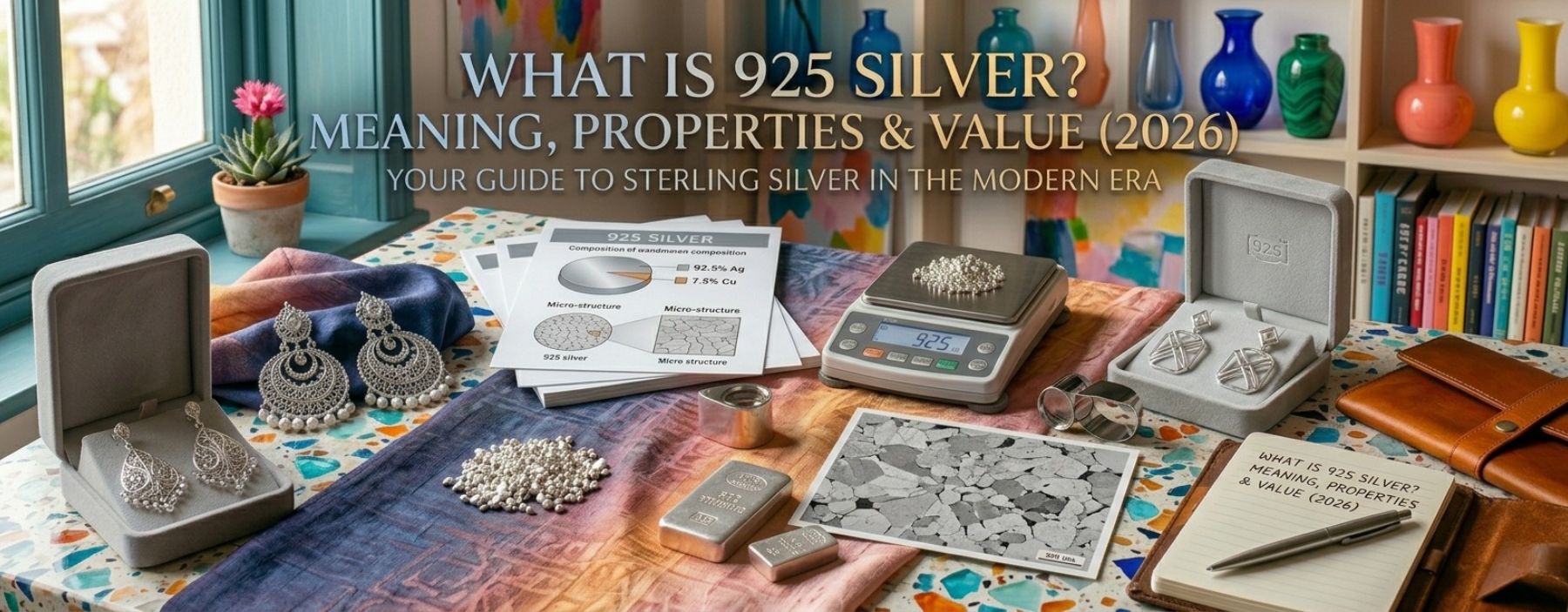
What Is 925 Silver? Meaning, Properties & Value (2026)
Have you ever seen the markings "925" or "sterling silver" on a ring or bracelet? This 925 is one of the most important quality markings in the world of jewellery.
Also known as sterling silver (925 silver), it has a composition of 92.5% pure silver combined with 7.5% copper; therefore, this alloy gives silver a renowned shine, as well as durability, as well as impressive intrinsic value for jewellery and other types of items made from it.
Sterling silver will continue to be the international quality standard for silver jewellery beyond 2026, and so the answer to why you should have 925 silver can be summed up in one word: beauty!
This guide will explain what 925 means, how it stacks up against other types of silver, how to check for authenticity, and much more. If you love silver, it’s still the best option for you!
What Is 925 Silver? - A Quick Answer
925 Silver (sterling) is composed of:
- 92.5% Pure Silver (the base metal for jewellery pieces)
- 7.5% Copper (or sometimes other metals - depending on the maker)
The "925" mark provides an internationally accepted hallmark indicating that the material meets this definition. 925 silver is used in the majority of instances because it provides an attractive combination of the natural beauty of silver and sufficient strength for jewellery that can be worn daily, such as rings, bracelets, necklaces and earrings.
Fact:
Fine silver (999) is softer than most vases; therefore, 925 silver is the preferred standard for practical applications.
What is the 925 stamp on Sterling Silver?
There is a very basic simple method of how we can define 925 sterling silver. It is simply created from 92.5% pure silver content and 7.5% solid copper content, which gives 925 sterling silver its unique appeal and significance. The addition of copper helps to provide additional strength to the silver without hindering the silver's bright reflective surface making it ideal for everyday wear.
Fine Silver vs. 925 Sterling Silver
Fine silver contains 99.9% pure silver and is therefore far too soft to use on a daily basis and because it can bend and easily be scratched, it is not considered an appropriate choice for daily wear jewellery. On the other hand, 925 sterling silver can be used for a number of different types of jewellery including rings, clasps, and intricate settings.
What Are the Key Attributes of 925 Sterling Silver?
1. Brinkliness & Brilliant - Reflect light naturally and bring an appealing look to any outfit.
2. Strength for Heavy Use - Strengthening copper helps to ensure that sterling silver will withstand daily usage.
3. Hypoallergenic & Safe for Skin - When used with products made from nickel free materials, sterling silver is safe for people with sensitive skin.
4. Versatile with All Types of Styles - 925 sterling silver is suitable for any of the different types of jewellery styles including modern, classic and dramatic.
5. Easy to Maintain with Low Risk of Tarnishing - It is easy to clean and restore the shiny finish of sterling silver.
Why Is 925 Silver Considered Superior to Pure Silver?
Although pure silver has a beautiful appearance, it is too soft to be used for functional jewellery. Pure silver is easily bent and scratched, and it often loses its original shape. However, if copper is added at an equal proportion of 7.5%, sterling silver can be made durable enough to withstand daily wear and still remain bright. This is why 925 sterling has been the standard quality of silver jewellery around the world for centuries.
Comparison of 925 Silver vs Other Types of Silver
|
Silver Type |
Purity Rating |
Durability |
Best Used For |
|
925 Sterling Silver |
92.5% |
Strong - A Copper Alloy |
Everyday Use, Gifts, Antiques |
|
Fine Silver (999) |
99.9% |
Very Soft - No Durability |
For All Types of Bullion and Artistic Products |
|
Coin Silver (90%) |
90.0% |
Medium - Limited Durability |
For Historical Coins |
|
Silver Plated |
Thin Coating |
Weak - No Durability |
Costume Jewelry |
|
Argentium Silver |
93.5% or higher |
Very Strong - No Oxidation |
Could Be Used as a Premium Alternative to 925 Silver |
The Value of 925 Sterling Silver
For those who want to understand the complete value of 925 silver, it is beneficial to recognize what an excellent balance of durability and price it provides. Unlike silver plated jewelry which will eventually lose its coating, 925 silver's value will continue to develop for both beauty and materials.
Jewellery made of 925 silver provides:
-
Lifespan & Durability;
-
Wear Every Day;
-
Timeless Appeal;
-
Notable Resale Value; &
-
Affordable Elegance & Luxury.
From stack rings to custom engraved pendants, sterling silver can offer something for anyone's style.
Ways to Maintain Your 925 Sterling Silver Jewellery
The best way to store silver jewellery is to keep it in a soft pouch or different compartments so that there will not be any scratches or marks on the items when they are in storage.
Make sure you put your silver pieces on last when getting dressed because any perfume, lotion, or hairspray applied before the silver has a chance to brand will cause it to tarnish more quickly.
In order to help prevent tarnishing you want to wear your jewellery often as the oils in your skin will help slow the process.
When cleaning your silver jewellery you should gently clean it with a soft silver polishing cloth or use very mild soap and water.
When bathing or swimming you do not want to wear your silver jewellery, as chlorine and salt will quickly speed-up the tarnishing process.
You should expect your silver jewellery to become tarnished during regular use. Luckily, the tarnishing process is natural and you can reverse it by polishing it with the proper silver cleaning methods.
Why Will 925 Silver Still Be a Great Option for Modern Jewellery 2026?
Today’s modern jewellery buyers want three things from their jewellery: flexibility, long-lasting quality, and great price. 925 Silver has all three. That is why it is considered to be one of the most sought-after choices for everyday jewellery. 925 Silver has a perfect balance of practicality and luxury – thus, it has been one of the defining influences in creating today’s trends in contemporary jewellery.
Frequently Asked Questions About 925 Silver
1. Is 925 silver real silver?
Yes, 925 silver is considered to be real silver, as the "925" stamp/marking places 92.5% of the metal content in your jewellery as pure silver; therefore, it is worth considerably more percentage-wise than silver jewellery.
2. Does 925 silver tarnish?
Yes, 925 silver will tarnish but can be easily removed. Tarnishing is a natural process that occurs with all forms of silver and can be removed with a soft silver polishing cloth.
3. Is 925 silver quality?
Yes, 925 silver is the global standard for quality in the jewellery industry due to its long-lasting durability and shine.
4. Is 925 Sterling Silver Quality a Good Choice?
Indeed, 925 Sterling Silver Quality has been established as the international standard for the manufacture of quality jewelry because of its durability and luster.
5. Can You Wear 925 Sterling Silver Daily?
Yes, frequent wear will slow down the tarnishing process.
6. What Is the Difference Between 925 Sterling Silver and Pure Silver?
Pure Silver is a very soft metal, while 925 sterling silver is stronger than pure silver and is more appropriate to use to create items of Jewelry.
Conclusion
Jewelry made from 925 sterling silver represents the perfect combination of purity, durability, and timeless style. Knowing the definition of 925 sterling silver will help you confidently select authentic jewelry, whether for everyday use or meaningful gifts. Jewelry made from 925 sterling silver continues to serve as a great choice for long-lasting elegance.