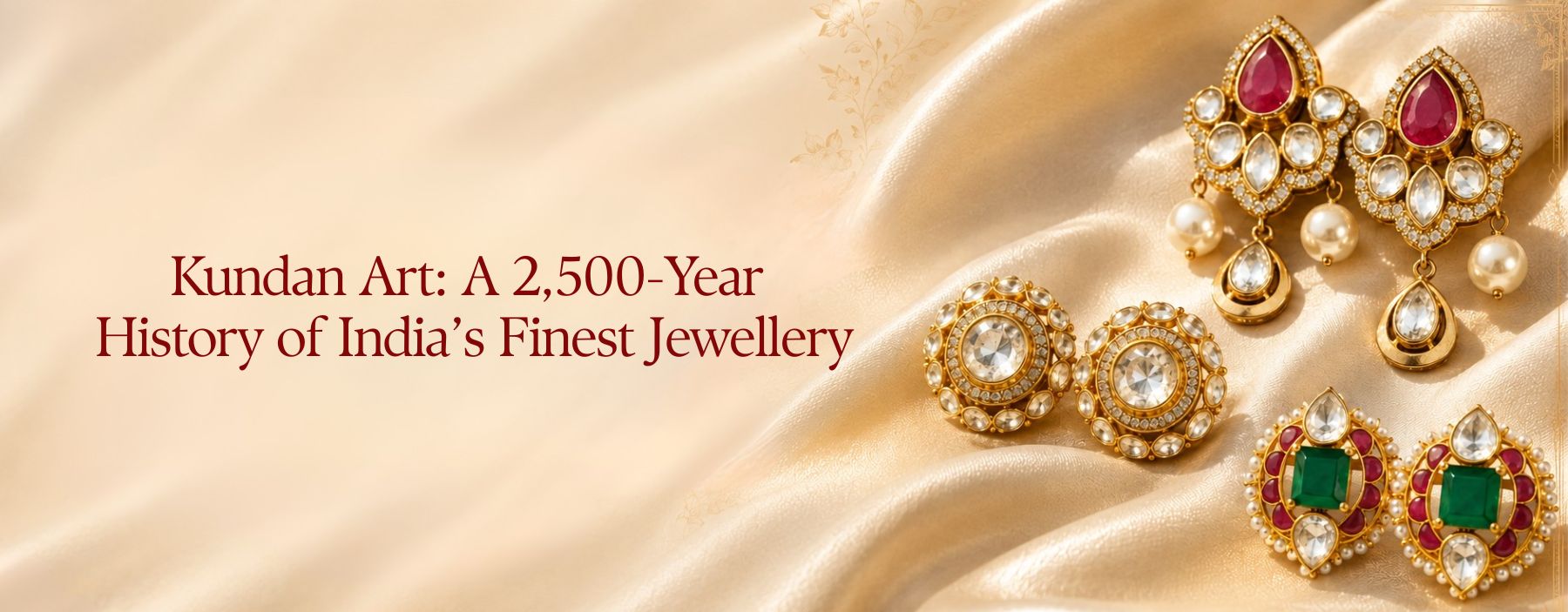
Kundan Art: A 2,500-Year History of India’s Finest Jewellery
For over 2500 years, Kundan art has been one of India’s most prized jewelry forms - a stunningly developed skill emanating from the illustrious royal courts of the Mughal Empire right down to present-day brides’ dressing tables.
Rogerian approaches and Mughal influences both contribute heavily to Kundan’s identity as crafted from pure gold with intricate gems that are hand-cut and then fastened to those pieces by using the Jadau method, i.e., the Jadau method for cutting/arranging the gems according to the desired orientation/metric.
This guideline will provide an overview of Kundan art history from its inception into modern-day revival. We will cover how the process is performed, the motifs represented in Kundan, and tips on identifying authentic Kundan.
Facts about Kundan Art
(1) One of the oldest jewelry forms (Kundan) was created in India approximately 2500 years ago based on the Mughal/Rajput perspective of ‘tradition’;
(2) Kundan making is made 100% from unrefined pure gold; and
(3) The Jadau process used to create Kundan includes ghat, khudayi (chisel cutting), meenakari (dyeing), and jadayi (joining).
Kundan Art:
The Evolution of Indian Jewelry from Mughal to Modern Times. There are five types of gemstones: diamonds, polkis, emeralds, sapphires, and rubies attached with a metal called gold foil (polish).
Included in this Art of Kundan are motifs (representations) that are inspired by the Mughal Empire. They are very detailed, usually in the shape of flowers, including lotus, tulips, and paisley designs.
- Time to Craft: Most traditional handcrafted pieces require weeks or months for completion.
- Authenticity: An authentic piece of jewellery will have high-quality workmanship and material certification.
- Kundan Art's Modern-day Use: Kundan Art is most popularly used in bridal necklaces, kundan tikka sets, earrings, and kundan tops.
Scroll down to see Kundan Art's complete history, how it was created, and its cultural significance.
The Royal Origins of Kundan Art – Mughal & Rajput Era
Royalty & Kundan Art's Royalty Dream started from Medieval Rajasthan (India) in the 1600s and continued growing through the 1800s within the mughal and Rajput Emperors.
Historically more than just ornaments, jewelry is a representation of power, status and art. Many Rajput Kings commissioned massive pieces of kundan jewelry that used multiple gemstones in their designs including emeralds, rubies, diamonds and pearls in complex gold designs. When Mughal influence merged with traditional Indian craftsmanship, kundan art evolved into one of the most luxurious forms of Indian jewelry.
Mughal Emperors were particularly fond of jewelry that contained extremely detailed floral patterns and were inspired by symmetrical architectural designs in addition to necklaces with a lot of stones. The various influences over time have created the beautiful and diverse visual identity we see in kundan jewelry today.
There is a deep-rooted belief in the culture of India - kundan jewelry has a connection to both bridal and ceremonial ornaments.
Creating Kundan Jewelry: Kundan Making Process
The traditional method of creating genuine Kundan jewelry involves a laborious and meticulous handcrafting craft that requires a lot of time and skill
1. Ghat - Creating the Base Structure
The jeweller starts with a base structure created using silver or gold wire (frames), which are curled into a design (neckl, earring, bangle, kundan thicket).

Detailed patterns inspired by flowers, vines, and Mughal architecture are carved into the surface.

Many kundan jewellery pieces feature colourful enamel detailing on the reverse side, adding hidden artistry and vibrant contrast.

5. The kundan flower

Each gemstone has been individually set into the necklace using several layers of high-quality reinforced gold foil that hold them in place. This process is entirely hand-crafted. Because of this, kundan art has remained one of India's most highly respected forms of jewellery for many years.
How Long Will it Take to Make a Piece of KUNDAN?
Depending on how elaborate the piece is, a single piece of kundan jewellery will take anywhere from a few weeks to a few months for completion. Pieces such as bridal necklaces, layered chokers, or very elaborate kundan tikka sets involve several artisans at once working on: engraving, setting gems, enamel detailing and finishing.
This is what gives kundan jewellery its timelessness and heirloom quality.
KUNDAN, Flower & Nature Designs
Kundan artists get most of their designs from natural and Mughal architectural sources.
Here are some fundamental principles for writing in Kundan style and examples of how those principles are applied:
Kundan Style
Kundan is an ancient technique used to create ornate designs for jewellery. They’re usually made from gold and gemstones (like diamonds) and decorated with patterns inspired by nature and holy symbols, like lotus flowers and peacocks. Kundan is a richly detailed form of art with a very distinct Burmese influence.
Examples: Here are some examples of Kundan styled pieces created by artists around the world:
- A necklace made from gold wire, handwoven beads of real gemstone and intricate soldering. The necklace has been designed to complement the wearer’s facial features, body shape, skin tone, etc.
- A bracelet made of gold filigree and a variety of gemstones all arranged into an intricate design. The bracelet is also designed to fit the wearer’s hand in order to be aesthetically pleasing as well as functional.
Kundan References
There are several references for learning how to create kundan styled pieces. Some great resources are as follows:
- Review books on Kundanism; there are many books written on this style of jewellery making and jewelry designers.
- Visit websites that feature kundan styles, techniques and education.
- Attend local museums to see historical examples of Kundan jewelry and style.
- Talk to jewellers about their items being made in the Kundan fashion and what their artisans use in creating these pieces.
- Use online forums to seek advice on craftsmanship in Kundan Jewelry.
- If possible, find vendors that sell authentic Kundan products, so that you can compare them to replicate pieces made by machine.
- Many artists are offering replicas of Kundan styled pieces for sale through the internet at reduced prices. Always ask about authenticity before making a purchase.
Bridal Jewellery and Kundan Tikka: What Does It Mean?
Kundan tikka is always a required addition to complete India's brides. Kundan tikka has been an integral part of Rajasthani, Delhi, and North Indian brides, being worn for weddings and holidays. Kundan tikka is a sign of feminine elegance, grace, and prosperity. Brides are now wearing kundan jewellery with lehengas, sarees, Indo-western styles, and modern wedding reception dresses. Lightweight kundan tops are now highly sought after for boutique-style ceremonies and festive occasions because they provide the benefits of traditional art while maintaining the comfort of everyday wear.
Frequently Asked Questions
1. What is kundan art?
Kundan art is an ancient form of creating Indian jewellery from crafted gold and semi-precious stones. Kundan art is traditional Indian craftsmanship derived from Mughal and Rajput artisans. What is a kundan tikka? A kundan tikka is a traditional forehead ornament created from kundan art that is traditionally worn by brides on their wedding day.
2. How is Kundan Jewelry Made?
Kundan jewelry is made with a hand-made process through various stages of creation, including frameworks, engraving, finishing, and setting bejeweled pieces in front of a piece of gold foil.
3. How Do I Know if Kundan Jewelry is Real?
Real Kundan pieces have a variety of details carefully handcrafted, the same stones are used in many pieces of jewelry (this is referred to as Meenakari), and all pieces carry a certificate of quality or authenticity created by the jeweler themselves.
4. Where Can I Purchase Real Kundan Jewelry?
Authentic Kundan pieces are available through reputable and established jewelers who specialize in handcrafted Indian bridal and traditional jewelry with proof of workmanship.
Conclusion
Kundan work is more than a type of jewelry; it is an artistic representation of the culture of India. Kundan's centuries-long history continues to impress both modern day brides and those who appreciate high-end jewelry that represents the craftsmanship of past generations (jewelry with Kundan tikka, necklaces, and Kundan earring tops). Discover authentic pieces of high-end jewelry that celebrate India’s greatness and its artistic heritage.